Article
30th January 2024
Limiting Beliefs – A Perspective on Reality
Limiting Beliefs – this term shows up with coaching clients so often these days, and it can seem so punitive, like it is a fault or a malfunction.
Actually the process that can be identified as limiting beliefs is a perfectly normal function of how our brain works and it is rooted in our evolutionary survival. It really can come down to our Perspective on Reality, our frame of reference.
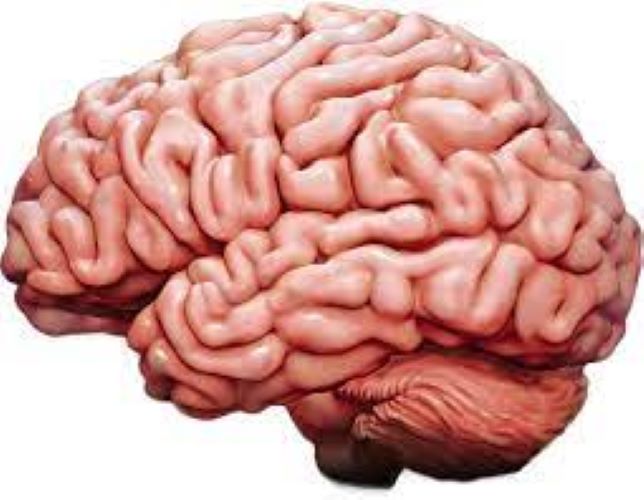
Our brain is a prediction engine. It takes data, obtained from the world within us and around us, Chemical data, touch, sight, taste, snell etc and makes predictions of what reality may account for this data, based on experience and norms. It is truly amazing.
One of the data sets used are cultural norms, referred in Transactional Analysis as the Cultural Parent. These are nurture engineered expectations, norms and standards and they can be very dogmatic. For example, have you ever experienced having to have a conversation with someone and imagine all the negative ways the other person will react, only to be surprised that they reacted in a completely different way to our prediction?
From my own life I remember the expectations, and limitations, offered to me when, in school, I was encouraged to follow a particular path based on social class, perceived opportunity and a need for my school to achieve results. “Get a trade”, “Go to college”, “Don’t do drama, you will never be an actor”. These cultural parents supported me to create my own perspective on reality, my own limiting beliefs.
As a coach I get tingles when I observe a client having a real shift in their perspective on reality, an expansion of their frame of reference. As a client I have the same tingles when my own perspective on reality and frame of reference are challenged.
Some years ago, whilst collaborating to produce and implement a behavioural based safety programme, we talked about the fallibility of the brain. I remember feeling scared at the thought that my brain could “make mistakes”. More recently I acknowledge that the idea that what I think, feel and do might be based on a false interpretation made me anxious.
Today I feel excited at the possibilities available to me by just being curious about what I think and feel. When I observe myself using language such as I Must, I Should, It Must Be I take this as an invitation to ask why I think or feel that. Must I? Should I? Must it be? When I have a phenomenological experience that my brain interprets as X, I wonder about context and are my thoughts, feelings, behaviours and perspective congruent and coherent? And if not, why might that be. And I find there is no longer any fear around not being sure.
Last year, during a training course we were practicing some one-to-one coaching. As the client I brought a piece from work that had been exercising me for a long time. I said of this issue “I have to …” and immediately my coach said “Have to?” This stopped me in my tracks! I was speechless! My frame of reference, my whole perspective on reality in relation to this issue was shaken! And just like that a whole world of realities, options and outcomes opened up in front of me. The limiting belief evaporated and I felt ecstatic.

I have, for some time now, been curious about my feelings and how phenomenological experiences in my body are interpreted by my brain. I have been reading an excellent book – How Emotions Are Made by Lisa Feldman Barrett. Through reading this book I am curious about I interpret what my body is saying to my brain.
For example, I am in a restaurant having dinner with a colleague I admire. I am experiencing an increase in my body temperature, my heart is racing and I have butterflies in my stomach. Am I scared? Am I physically attracted to this person? Or am I having a diabetic sugar rush having just put away two pieces of cheesecake? Or something else? Context and consistency are key here. I know this person very well and have never felt scared or intimidated in their presence before. Also I have never observed this phenomena before with her, so unlikely I have suddenly developed an attraction for her now. And I have just eaten two slices of cheesecake.
Of course there are times when taking time to ponder and process might not be appropriate. In an emergency the whys and wherefores of our bodily response can wait for later. Though when we can create the safe space to wonder, it can be time well spent.
As we develop through childhood we start to assign labels to certain bodily experiences. I feel hot and my fists are clenched. I must be angry. That persons mouth is downturned and their brow is furrowed. They must be feeling anxious. But Lisa Feldman Barrett contends that this isn’t always so. Continually fine tuning our interpretations and predictions are important exercises to our brain.
The beauty of our brain is that it is not fixed. It is not enthral to dogma. It is on a continual quest to refine our models and maps of experience. It will take new learning and create new neural pathways of possibility every time we are curious. And curiosity has no inherent right or wrong.
In todays heavily task oriented world the opportunity to sit with a friend, trusted colleague or coach and have a courageous conversation about objective reality is gold and it is our process. We could give more time to that process, as an investment, and prosper. If it helps think of it as machine learning, or calibrating the most precious piece of equipment we will ever have.
In each of our role worlds, private, professional, organisational and community, navigating through, thriving, succeeding is massively influenced by how we see the world, our place in it and the experience inside our own bodies.
Be courageously curious and rid yourself of limiting beliefs.